
Sacred Herbal Ferments Class
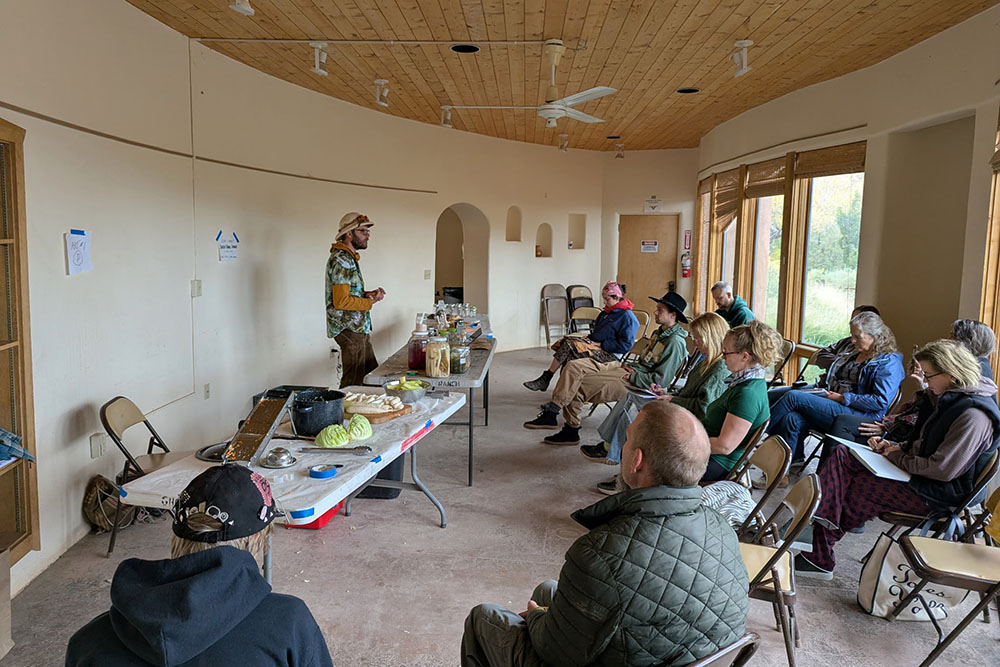
At the Good Medicine Confluence 2026, Food Church founder Aaron taught a class on fermentation, featuring a hands-on demonstration where participants got to take home their own jar(s) of kimchi or kraut! We’ve included here the transcript of the class — Enjoy!
Introduction
We’re here to talk about fermentation! This is going to be an overview of fermenting methods, with some history, folklore, and ritual of those methods. Then towards the end of class, we’ll put some of this information to work and you can go home with your very own jar of kraut and/or kimchi.
We will be discussing the three most common types of fermentation, which can be grouped by the microbes that produce them:
- Alcohol is made by yeasts consuming sugars and pooping out alcohol, co2, and heat.
- Vinegar is made by acetobacter consuming alcohol and pooping out acetic acid, cellulose and a couple other odds/ends.
- Sauerkraut/kimchi are made by lactic acid bacteria who eat sugars and carbohydrates and poop out lactic acid, which is what makes them tangy, and the reason we call them Lacto-ferments, or LAB ferments.
People harness these transformative powers to preserve food, to make it more medicinal, more digestible, less toxic, and often more delicious.
A quick reminder before we get to deep:
All fermentation is partnering with living spirit, partnering with numerous lives, whole societies, millions and billions of lives as important to each one of them as your life is important to you. We are not controlling these people, but teaming up, modulating their environment, making a home/ecosystem suitable for specific cultures of various microbes. It is important to recognize that fermentation is a natural phenomenon much broader than culinary practices; in fact, cells in our bodies are capable of fermentation. In other words, humans did not invent or create fermentation; fermentation created us.
So, before we begin, let us enact one of the oldest rituals people use when starting a new ferment, “calling the corners” or “the four directions”:
- East: “Spirit of the East, wind and dawn, messenger of beginnings, I call you. Stand at this quarter and guard this work.”
- South: “Spirit of the South, fire and flame, keeper of transformation, I call you. Kindle the heat of inspiration.”
- West: “Spirit of the West, waters and tides, bearer of healing, I call you. Bring your currents of flow to this classroom.”
- North: “Spirit of the North, earth and stone, anchor of strength, I call you. Ground this work in stability.”
- Inward: [Close eyes] “And now I turn inward. The spark that is not yet flame, the current that is not yet flow, the ground that is not yet stone. We are here. Let the work begin.”
Origins & Folktales
It’s interesting that all human cultures, however separated by time and geographical distance, tell much the same tales or myths in explanation of how things in our world came to be.
For example: virtually every culture has some variation of the story of Pandora’s box. For the ancient Greeks, Pandora was charged with guarding the box of the gods having been warned to never open the casket. Her basic curiosity succumbed, forever unleashing disease, famine, death, and all the other horrors and sorrows upon humanity. The end of this tale is that Pandora found one item left in the box … a gift to mankind. At the bottom of Pandora’s box remained hope. And hope was all that was left to a suffering species.
In the folktales of tribal Africa, a black Pandora repeats her Greek sister’s rash act except the African makes a different discovery remaining in the casket. The hope she finds has a physical manifestation, a gourd of beer.
Many stories say this is a gift from the mother goddess. Long before the bearded patriarchal male gods, there was the goddess— feminine spirit of birth and fertility; the earth mother. Ancient legends from around the globe tell how the goddess took pity on the miserable plight of humanity and so loved her daughters that she bestowed the gift of brew to the women of mankind. And until the last couple centuries it was primarily women who stewarded this gift, This cup of bliss, the gourd of temporary forgetfulness which was filled with beer…
By contrast, as H. L. Mencken wrote:
“All the great villainies of history, from the murder of Abel onward, have
been perpetrated by sober men, and chiefly by teetotallers. But all the
charming and beautiful things, from the Song of Songs to bouillabaisse, and
from the nine Beethoven symphonies to the Martini cocktail, have been given
to humanity by men who, when the hour came, turned from tap water to
something with color to it, and more in it than mere oxygen and hydrogen.”
Odd that this first gift of beer is often called the cup of temporary forgetfulness…on the other end of the spectrum we have: The well of rememberance, which ties us to…
Ancient vs Current Worldviews
The ancient Nordic saga, the Elder Edda, says that the Well of Remembrance is located at the foot of Yggdrasill, the world tree. It confers on anyone who drinks from its waters, the ability to see in new ways and to tap into the ancient knowledge and wisdom of Earth and mankind. As the saga relates, Odin, hearing of this well, desired to drink from it, and he approached the well’s guardian, Mimir – from whose name the word ‘memory’ comes– to ask for permission. After questioning Odin, Mimir agreed, but first told Odin that there would be a price—it would cost him one of his eyes. Odin agreed and gained what he desired, but forever after he saw this world through only one eye.
As it is said: “to gain knowledge and vision of the ancient worlds, one must give up how one has been seeing.”
For those of us raised in perhaps the most materialistic era the Earth has ever seen, drinking from the Well of Remembrance allows us to see as our ancestors did thousands of years ago, but in return we must sacrifice some of the worldview that we have been taught is reality.
Among us in the West, perhaps those who remember this the most are the artists and poets. They see into other worlds and bring back to us other ways of seeing that are encoded in the poetry they write.
One such poet, who has brought back knowledge of the Indigenous Mind and encoded it in his poems, is the writer Norbert Mayer. In this poem he writes of the livingness of stones:
Just now
A rock took fright
When it saw me.
It escaped
By playing dead
Mayer captures something that many of us intuitively know—that there is more to our world than just human beings and inanimate matter, that there is a livingness in nature. His poem shifts the focus of the listener’s mind, causing the world to be seen in an entirely new(and ancient) way. In this instance, to perceive the rocks we pass by without notice each day as alive and aware. And, by extension, to wonder if perhaps everything else might also be alive.
Poets in the ancient world were known as the “bearers of the mead of Odin.” A name that comes from one of the oldest recorded accounts of mankind’s first encounter with fermented beverages:
In the beginning was war. The older gods, the Vanir, vs. the younger gods, the Aesir. The war want on ceaselessly but neither could gain advantage. Eventually tiring of battle, they agreed to meet and make peace among themselves. They decided to heal the rift between them in this way: a large earthen vessel was brought, and each leaned and spit into it until it was full to overflowing. Then, unwilling to let this mark of their peace perish, they spoke together, and shaped it into a man whom they called Kvaser, the all-knowing — one so wise that there was no question that he could not answer.
Kvaser walked the heavens for ages, a symbol of peace. But there came a time when he wandered too far and was murdered by dwarves who mix his blood with honey to create a mead that turns any drinker into a sage or poet. The giant Suttung heard of it and, after long planning, stole the three vessels of dwarven mead and hid them in his mountain home.
Odin, hearing of this, waited for him to leave and let his daughter Gunnlod guard it. Then Odin changed to the form of a giant and seduced her, they lay for three days and nights, where he satisfied her greatly. Being wondrously happy, she offered him three drinks. He sipped from each vessel and commented to her that it was most wonderful. But at that moment Suttung returned. Looking into the vessels, he found them empty, so Odin changed to an eagle and fled back to Asgard, chased by the giant, also an eagle. And the gods, seeing Odin come, made haste to gather vessels and place them outside. Odin vomited the mead into three vats, spilling three drops to earth in his haste, which were found by wandering men. Wondering what this might be, they lifted it to their lips, tasted of the mead made from Kvaser’s blood and the honey of the bee, and became inspired. This is called “the share of the poetasters, and was inspiration for all poetry and song. Hence, songship is called “odins drink,” or “odins gift” and poets of the ancient world were known as the “bearers of the mead of Odin”.
This highlights the important connection between the verbal arts and fermentation, between becoming wise and the ingestion of honey or mead, and between sacredness and inebriation that has long been understood by humanity.
In the Rig-Vedas, the holy books of the Hindus, Vishnu and Indra are called Madhava, the honey-born ones, and their symbol is the bee.
In addition to the spiritual associations, men have recognized from the earliest times that honey, and particularly mead, have strong healing virtues. Regular consumption of mead, it was claimed, would restore youthfulness, increase sexual drive, prevent illness, and cure diseases such as arthritis, stomach ulceration, bronchitis, impotency, general weakness and debility, heart disease, cancer, as well as many others
The ancient claims about mead’s healing powers may not be pure fantasy, since its traditional ingredients—honey, propolis, bee pollen, royal jelly, and even bee venom—each carry documented medicinal properties that align with those historical assertions. Additionally, ancient meads were sometimes made by dropping the whole hive into the pot-angry bees and all. Each component contributes specific antibacterial, anti-inflammatory, immune-boosting, and anti-aging effects.
This is illustrated by the case of Noel Johnson, who at the age of 70 was given 6 months to live, but began eating a diet consisting largely of honey and hive products, as well as running/training. By the age of 79, he won a gold medal at the Senior Olympics by knocking out his 40-year-old opponent in the final. He was a seasoned marathoner competing in events on every continent on Earth, and the oldest man to finish the New York City Marathon. He looked to be about 55 years of age until his death in 1996.
This stands in contrast to the modern tendency to dismiss such ancient claims as mere fantasy. Additionally, legends clearly state that mead is especially life-imbuing, exactly the opposite of what you’d suppose based on another commonly accepted axiom among us: that alcohol is a bad thing but that it is impossible to get rid of—people are going to use it anyway. The battle thus turns to narrowing those times and places where it may be used, to making sure that those who use it know of their flaws of character, and that its life enhancing qualities and our relationship with it as human beings are safely forgotten.
However, not only was Jesus’ first miracle turning water into wine, in 1 Timothy 5:23, Paul instructed his associate Timothy to stop drinking only water and to “use a little wine” specifically for medicinal purposes to treat his stomach ailments and frequent illnesses.
It is known that all vertebrates sometimes enjoy alcohol. Elephants will knock down wine palms, step on the trunk to make a depression in the trunk, wait while the sweet sap fills the hole and ferments, then drink what they have made. Birds get drunk on fermenting fruits all the time, and even bees have been known to get intoxicated. But it is humankind who has had the longest and most involved relationship with alcohol, and until the past 150 years, it was viewed from sacred perspectives that were remarkably similar throughout the world.
The sacred realms have long been insisted upon by humanity, for human beings have the capacity to perceive extremely subtle states of mind and spirit.” All ancient cultures agree that fermentation holds within it some magical substance, a spirit, that can awaken or enhance capacities like these that lay dormant.
This “spirit” in alcohol was believed to “preserve youth, prolong life, and prevent senility.” And in every culture in which it exists, alcohol has been used for healing, in ceremonies and rituals, to personally take on attributes of the sacred, and as a source of song and poetry.
The search for that substance, the spirit of alcohol, was accomplished by the Islamic alchemists through distillation (c. 721AD) when they isolated the pure spirit of alcohol, aqua vitae, the water of life, the water that burns like fire. Eau de vie, aquavit, and usquebaugh all mean water of life.
This “water of life” could be considered the “active constituent” in alcohol ferments, and came out of the same thinking process that led to the isolation of other active constituents in plants.
Conventional Medicine vs Alcohol
Conventional medicine is based in part on finding the “active constituent,” isolating it, and making it into a drug. Some researchers have noted that these “active constituents” produce side effects out of proportion to their use in the whole plant. Plants, complex beings that they are, contain scores of substances, many of which function to either enhance the activity of “active constituents” or to ameliorate their side effects. And like all “pure” substances isolated from plants, the introduction of distilled spirits at 40–95% ABV, available outside any ritual framework and in quantities that made sustained heavy drinking physically possible for the first time, removed both the fermented plant context and ritual constraints simultaneously. This concentration, new to the human species, has played a crucial part in the broader cultural shift toward limiting alcohol use. To understand why, you have to start with what alcohol actually is in its original form.
Without distillation, fermentation produces a beverage in the 1.5–18% ABV range, generally 3.5–12%. And in this most ancient of contexts, the pharmacological profile is genuinely impressive: mild sedative (progressing to anesthetic), mild antimicrobial (via tannins and botanical additives), peripheral vasodilator, gastric secretory stimulant, and short-lived dopamine kick. It relaxes, reduces inhibition, augments appetite, and produces a subjective exhilaration. What it does not quite do is increase cerebral activity or truly heighten sensory perception — it removes the brain’s top-down filtering, which feels like heightened perception but is an attentional effect, not a sensory one. A brake released, not an engine revved.
Here’s the thing nobody tells you: a glass of red wine isn’t just ‘ethanol with some grapes in it.’ And a traditional gruit ale with wormwood in it isn’t just ‘beer with a weed in it’ — thujone does the opposite thing at your brain’s GABA receptors that ethanol does. Ethanol slams the brakes; thujone takes a foot off them. The drink is literally fighting its own intoxication at the receptor level.
And the polyphenols? They’re putting a seatbelt on the liver damage. Less oxidative stress, less fat accumulation, less inflammation. Your liver isn’t being supercharged; it’s being spared.
Now when we start adding medicinal plants, we can take this to the next level. We’ve already seen how thujone counteracts ethanol at the receptor level, but the other mechanisms are just as interesting. Bitter compounds and tannins slow gastric emptying so ethanol doesn’t flood your bloodstream all at once but trickles in over a longer window. That alone flattens the peak BAC curve, which is where most acute damage happens. Then you start adding things like artichoke or dandelion, which have their own hepatoprotective pathways and are just plain great for the liver.
So when we look at traditional ferments, we’re looking at medicine, not just “alcohol with some antioxidants.” They are multi-target formulations, one component delivering psychotropic effects, others buffering oxidative damage, slowing the absorption curve, protecting the liver, etc. 19th-century herbalists would call it ‘a tonic,’ modern pharmacologists would call it rational drug design. Same thing, different vocabulary. The ‘alcohol is poison, full stop’ narrative doesn’t just erase the polyphenol buffer — it erases the entire pharmacological architecture that made these drinks work the way they did.
The widely publicized negative effects of alcohol come from, as noted earlier, separation from its sacred/ritual context and isolation from its plant matrix. In traditional fermentations and the cultures that use them, the negative side effects of alcohol are rarely found. Alcoholism, solitary drinking, and the various diseases attendant with alcohol abuse are essentially absent from the 31 indigenous cultures surveyed by Steven Harrod Buhner, irrespective of volume consumed.
The fact is that all ferments—whether yeast or bacterial driven—generally retain and in most cases enhance the medicinal properties of their ingredients. The alcoholic ferments we’ve been discussing are the most well-known example, but they’re also the most complicated one: you’re getting all of that pharmacological architecture alongside a CNS-active toxin that you have to manage.
Lacto-ferments, however, strip out the problem entirely. No ethanol, no GABAergic disruption, no hepatic load. Just the bacteria, the substrate, and the same principle — a living microbial process that transforms raw ingredients into something pharmacologically richer than the sum of their parts. And in terms of pure medicinal density per serving, few things do this better.
Kraut as Medicine
Humans have long recognized that fermenting is not merely a method of preservation or a way to get buzzed, but one of the most effective ways to make medicine through a state of heightened biological activity where microbes actively pre-digest, synthesize, and protect the very compounds we rely on. It is the alchemical engine that retains and transforms static ingredients into a living, breathing culture — one that, in a recent Stanford RCT, reduced 19 inflammatory serum proteins across an entire cohort (Wastyk et al., 2021).
This transformation is critical because it solves the bioavailability paradox: in raw or dried herbs, the bulk of beneficial compounds remain trapped inside cell walls. While stomach acid and digestive enzymes break down some of these barriers, much of the nutritional potential often passes through unabsorbed — a gap that lactic acid bacterial (LAB) fermentation demonstrably closes (Dissanayake et al., 2025). Furthermore, many plants contain natural defense mechanisms — toxins and anti-nutrients like lectins, oxalates, and phytates — that inhibit absorption and, in some cases, trigger inflammatory responses.
These facts have been highlighted by proponents of the Carnivore Diet and the Plant Paradox, who argue that because plants are rooted and cannot flee predators, they have developed complex chemical defense mechanisms to deter consumption. It is argued that humans lack the specialized digestive systems of herbivores (like ruminants) to process these defenses, leading to the belief that a diet excluding plants entirely is more aligned with human biology. These theories often distinguish between fruiting bodies, which evolve to be eaten to spread seeds, and vegetative parts (roots, leaves, stems), which are viewed as having stronger defensive chemicals since their consumption prevents reproduction.
The anti-nutrient concern is legitimate; however, the conclusion overlooks a third, ancient pathway. We don’t all have to go out and start eating meat — for one thing, many of these plant toxins are neutralized by cooking, although at the loss of enzymes and many micronutrients.
By contrast, LAB fermentation not only preserves but enhances enzymatic activity, dramatically increases nutrient and antioxidant bioavailability (Dissanayake et al., 2025), releases proteins and amino acids into bioavailable form, synthesizes new vitamins and bioactive compounds not present in the raw substrate — including D-phenyllactic acid, a potent anti-inflammatory ligand of the HCA3 receptor (Stäubert et al., 2019; Wei & Marco, 2025) — and actively degrades anti-nutrients like phytates and lectins without the destructive effects of heat. Crucially, these benefits persist even after pasteurization, indicating that the fermentation chemistry itself — not merely the live cultures — is responsible
(Schropp et al., 2026).
In doing so, it renders even highly defensive plant parts safer, more digestible, and profoundly nourishing: reducing fasting glucose, triglycerides, and blood pressure (Nutrition Reviews, 2025), modulating immune cell signaling at the single-cell level (Lee et al., 2025), and — in a striking recent finding — binding and excreting nanoplastics before they can be absorbed into organs (Lee et al., 2026). Fermentation bridges the gap between plant-based wisdom and human biological limitations, turning the very defenses that make plants “dangerous” into the raw material for something profoundly medicinal.
So… let’s get a little more nuts and bolts…
Curating the Culture
We’ve seen what fermentation does. Now let’s talk about how you make it happen. At its core, fermentation is the transformative action of microorganisms. Basically microbes eating and pooping out things that we like. Some definitions emphasize the role of enzymes, as it is through the action of enzymes that cells digest and thereby transform nutrients.
Different ferments do this in different ways. By modulating the fermenting environment, we select which microbial families thrive.
For example: by stuffing vegetables tightly into a jar so they are submerged under their own juices, we exclude air, thereby excluding molds, encouraging bacteria. By adding salt at 2-5%, we make it easy for Lactic Acid Bacteria to thrive, who quickly acidify their environment, preventing anything else from surviving.
-Similarly, the air-locked carboy containing a fermenting alcoholic beverage serves to exclude air to prevent the growth of aerobic Acetobacter that transform alcohol and oxygen into acetic acid (vinegar)
-By contrast, when making vinegar or tempeh, oxygen IS required, so air must freely circulate in the fermentation environment. Tempeh requires a warm environment, around 85–90°F/30–32°C. Yogurt does best in an even warmer environment, roughly 110°F/44°C, but does not require oxygen.
Much of the practice and technique of fermentation amounts to understanding the selective environment you want, and effectively creating and maintaining it. There are rules of thumb for each type of environment, although, it is good to remember:
“Rules alone cannot teach you how to do something. Written instructions are insufficient. Culturing food reminds us of this regularly. You can’t learn it all from reading. Put down the instructions and ask someone else what they’re doing.”
-Lisa Heldke, professor of philosophy, Gustavus Adolphus College
Even though they’re insufficient, rules are good to follow. Culturing foods may not be a purely mechanical activity, but being a bit careful and systematic about it will increase your chances of success tremendously.
Not everything in life is a stir-fry — an endlessly flexible, infinitely adaptable dish. Some things are like yogurt — fussy about the temperature difference between 108° and 115° [42–46°C]. (Consider your friends; some of them don’t care if you show up an hour late for dinner, while others are going to be more than a bit peeved.) Pay attention. Honor the one you’re with.
Ritual: Kraut & Kimchi
And that honor — the attention, the tending, the ‘honor the one you’re with’ — has been paid to these living systems in many ways throughout the world. In some traditions, it’s been codified into ritual so thoroughly that the fermenting space itself becomes a kind of shrine. Nowhere is this more visible than in Korea.
Korean kimchi has been around at least 3,000 years, with the earliest literary references and the oldest surviving storage jars dating to the 6th century. Few structures go back farther than the jangdokdae — a name that literally means “crock platform.” It is a raised platform outside the house where rows of earthenware onggi jars sit, oriented south for maximum sunlight and ventilation. Placement is chosen by pungsu (feng shui) principles to encourage the best fermentation and bring good fortune to the household; jars can also be positioned in entryways and key areas of the home to block negative influences. These jars were sometimes used for generations. Until the 1970s, nearly every Korean home had one, and the jars on it outlived the people who made them — and sometimes the house itself.
The jangdokdae is considered a sacred domestic space, primarily managed by women, and a site for household prayers and shamanistic offerings. A well-organized, prominent jangdokdae is believed to bring prosperity to the household. The daily ritual is simple: open the lid on clear days, close it the moment the sky clouds over. Rain is the real enemy — a single splash could “grow thorns” in the ferment, a traditional expression for spoilage. The jangdokdae is treated with a reverence that borders on the sacred — as much a part of the family’s spiritual life as its physical sustenance.
The jars are filled during kimjang, a late-autumn communal event in which whole neighborhoods gather to make kimchi collectively, based on pumasi (품앗이) — a traditional practice of cooperative labor exchange. Knowledge is transmitted from mothers to daughters, or mothers-in-law to daughters-in-law. After making, households exchange batches with neighbors, especially the less fortunate. UNESCO has inscribed it not for the food but for “the social architecture wrapped around the technique” — the reciprocal obligation, the identity, the belonging.
Across the border, Chinese tradition has a “mother brine” — an ongoing batch where fresh vegetables are added whenever the crock gets low, the brine never fully discarded, and in some families passed down for five generations or more.
Farther north, the Russians keep a russel — a fermented beet brine used as the base for borscht, maintained as an ongoing culture that is never fully discarded. In Russian folk belief, the soul of the departed is carried to heaven on the steam rising from a bowl of borscht. The fermented beet brine is literally the base of the soup that feeds the dead.
In Germanic and Eastern European countries, sauerkraut is made after the last major harvest of the year, echoing the Korean kimjang: four generations or more gather to shred and pack, and in Pennsylvania Dutch communities a single batch can run to 300 gallons, tamped down with a wooden stomper. Barrels are stored in cellars for a slower, longer fermentation, with the first batches ready just in time for New Year’s. The first taste is lauded as good luck. Pork and sauerkraut is the traditional New Year’s dish — the pig “roots forward” (progress), cabbage is round like coins and green like money, and families would wish each other “as much goodness and money as the shreds of cabbage in the pot.”
In Jewish tradition, LAB ferments are woven into religious practice. The Talmud states that one who recites the blessing over bread should have salt and leaftan (a word from “turnip,” meaning relish or pickles) at the table. Kosher law treats pickling as akin to cooking — you cannot pickle meat and dairy in the same jar. And after the holiday of Sukkot, the etrog — the ritual citron used in the ceremony — is preserved into a syrupy ferment. The fruit that was just held in prayer becomes the substrate.
Whether it’s a jar on a platform, a brine passed down five generations, a steam that carries a soul, or a citron that was just used in a blessing, the pattern is the same: the ferment is not just food. It’s a relationship, tended across time.
Ritual: Alcohol
Similarly, alcohol has often served as a sacrament to consecrate new homes and garden sites, but also plays ceremonial roles in births, baby namings, lineage successions, and funerals. Different cultures have come up with diverse ways of honoring alcohol, abut there are many overlapping similarities.
Commonalities include:
- Honoring the Four Directions: often as simple as pouring a bit of the new batch into the four corners
- Rituals to Ward Off Bad Yeasts and Attract Good Ones – Often during the initial ceremony there is an act of encouragement or protection:
–Encouragement: often involves dancing and singing noisily near the new ferment to encourage the yeast to wake up and act strongly, and in northern traditions sometimes yelling into the fermenter as they pitched the backslop.
–Protection: a few cultures do the exact opposite, protecting it from anything that could “startle” the yeast. Sometimes singing calmly around the beer to maintain the connection between the spirit of the plants and the people. - The “Boiling” as a Birth Event: people often celebrated when the batch first started to ferment, or “boil, work, foam, the fire was kindled”. The similarities of terms is interesting as yeast works through a rapid oxidation of the sugar, a kind of burning. And when it is at its most active, does indeed bubble energetically.
This event was referred to as:
– Charoti (South America): “The birth of the good spirit”. South Americans often include another offering to the four directions at this time
– Norse: coming of the bryggjemann “Brewing man”
– Ainu (Japan): Kamuy Fuchi “grandmother spirit” - The Fermenting Vessel as Sacred Object: In many cultures the wild yeast that came into the wort would be kept and nurtured as a part of the family. Like sourdough starters, some wild yeasts were used for many hundreds of years, and there were many methods to make the bryggjemann a home until it was time to feed him again.
– Like kimchi: the fermenting vessel could be kept and reused for centuries, sometimes by scratching lines that were inscribed in which the yeast could hibernate until the next brewing (oddly enough, the lines found inside South American and Egyptian clay brewing pots closely resemble modern symbols from the study of biogeometry). These jars could be used to “teach” new jars how to ferment. The Tarahumara of Mexico would place new jars around an old one that had already “learned to boil”.
–In monasteries: they still sometimes use inscribed branches to stir the first batches of ferment.
–In northern cultures: Juniper branches would be placed in the bottom of the brew and hung up to dry after to save for the next batch. Yeast can easily live a year in such a manner, and if tended to with devotion, will always produce good ale.
You might think that all sounds a little…messy.
Indeed…
Cleanliness vs Sterilization
Most modern literature emphasizes chemical sterilization of equipment, and even of fermentation substrates and ingredients using campden tablets (potassium metabisulfite). I generally swear by Star San: acid based surface sanitizer, 1-2 mins, no rinse, & food safe. Easy to use and a single bottle will last a lifetime of home-brewing.
And it is certainly important to work with clean hands, utensils, and equipment, BUT in general, sterile conditions are not necessary for fermentation.
Cleanliness, not sterility: Excessive sterilization is not necessary. Why?
Hot water and soap works fine 99 times out of 100, or a strong infusion of antiseptic herbs. This isn’t new thinking. As the English brewer Thomas Tryon explained in 1691:
“Now the best way to prevent this Evil [infection of the brew] is that your Coolers are washed well in cold water, wherein some bitter Herbs or Seeds are infused 24 hours, as Wormwood gathered and dried.” His other suggestions include pennyroyal, lemon balm, tansy, mint, wormwood, even fresh hay.
Environmental Mods
WATER
-Use spring or well water where possible.
-no chlorine, chloramine, or fluoride. Free chlorine can be boiled off (15–20 minutes) or neutralized with Campden tablets. Chloramines, increasingly common in municipal water, cannot be boiled out and require Campden tablets. Fluoride cannot be removed by any home method short of reverse osmosis or activated alumina filtration.
SALT
–Never iodized, Sea salt works but since our oceans are increasingly polluted. It is recommended you look for minimally processed, single-origin varieties for the most complete mineral profile.
-2% by weight of vegetables for standard kraut, 2.5% by weight for kimchi. That’s 20–25g of salt per kg of vegetable.
–Always measure weight, not volume: a tablespoon of kosher salt weighs nearly half as much as a tablespoon of fine sea salt.
–Always 2%-5%: Below 2% = mold risk, LAB competition. Above 3.5% = LAB slow down, ferment stalls, tastes of salt rather than sour. Above 5% = preservation with salt, not fermentation.
TEMPERATURE
-Higher temp = faster fermentation.
–LAB (Lactic Acid Bacteria): Ideal range for most vegetable ferments: 65–75°F (18–24°C). Below 55°F fermentation slows dramatically, delaying the pH drop and increasing mold risk. 75–86°F produces sharp, vinegary flavors and mushy texture as Lactobacillus outpaces Leuconostoc. Above 113°F most LAB die (exception: thermophilic yogurt cultures at 110–115°F, which die above ~118°F).
–Alcohol: Ideal range for most yeast: 68–86°F (20–30°C). Below 50°F yeast stalls, leaving residual sweetness. 86–95°F produces harsh fusel alcohols and solvent-like off-flavors. Above 95°F yeast dies.
–Vinegar (AAB): Ideal range for most Acetobacter: 77–86°F (25–30°C). Below 59°F fermentation crawls to a near-stop. 86–95°F is exothermic stress — the reaction itself generates heat, so in large batches the liquid self-heats past the optimum and slows conversion. Above 95°F (35°C) most strains die; though thermotolerant strains push to ~104°F (40°C).
LIGHT/DARKNESS
-protect from direct sunlight.
FERMENTATION VESSELS
VESSELS: pottery, glass, wooden, gourds, baskets. Egg shaped vessels promote natural convection/mixing. Avoid reactive metals: (aluminum, copper, unglazed terracotta) — the acid will leach them.
TOPS: corks, air locks, threaded lids, water-seal lids.
-Leave ~25% headspace for active ferments — CO₂ production means the brine will rise.
-For solid food: wide mouth jars are preferred. Mouth-size is less important for liquids, unless air is required.
–Remember to burp sealed jars!
SUBMERSION
–Keep LAB ferments submerged under its own brine at all times. Anything above the liquid line is where mold and kahm yeast will start. A clean weight (such as a small glass, a ceramic crock weight, a smooth river stone, a cabbage leaf folded over the top) keeps things down.
-Skim open crocks of kraut regularly.
-Check daily for the first week. If the brine level drops (cabbage shrinks as it ferments), top it with a 2% salt water solution.
MONITORING (pH)
–Taste: the single most reliable indicator. “Sour enough” is a pH reading you do with your tongue.
–Smell: “clean sour” vs. “off” (rotten, putrid, vinegary when it shouldn’t be)
–Sight: clarity of brine, presence/absence of mold, color shift of the vegetable, foam vs. sediment.
–Behavioral Examples: “Day 3 it should smell like this,”… “If you see white on top, skim it,”… “If it tastes sharp enough to make your jaw tense, it’s done.”
STARTER
STORAGE
-Once the ferment hits the sourness you want, refrigerate. This slows LAB to a near-halt without killing them.
-A kraut that’s been fermenting at 68°F for 3 weeks will keep in the fridge for 6–12 months.
-The ferment doesn’t “finish” and stop — it just gets slower and slower. If you want it to stop entirely, pasteurize (10 minutes at 85°C), but you lose the live cultures.
DEMO
MAKING YOUR OWN KRAUT / KIMCHI
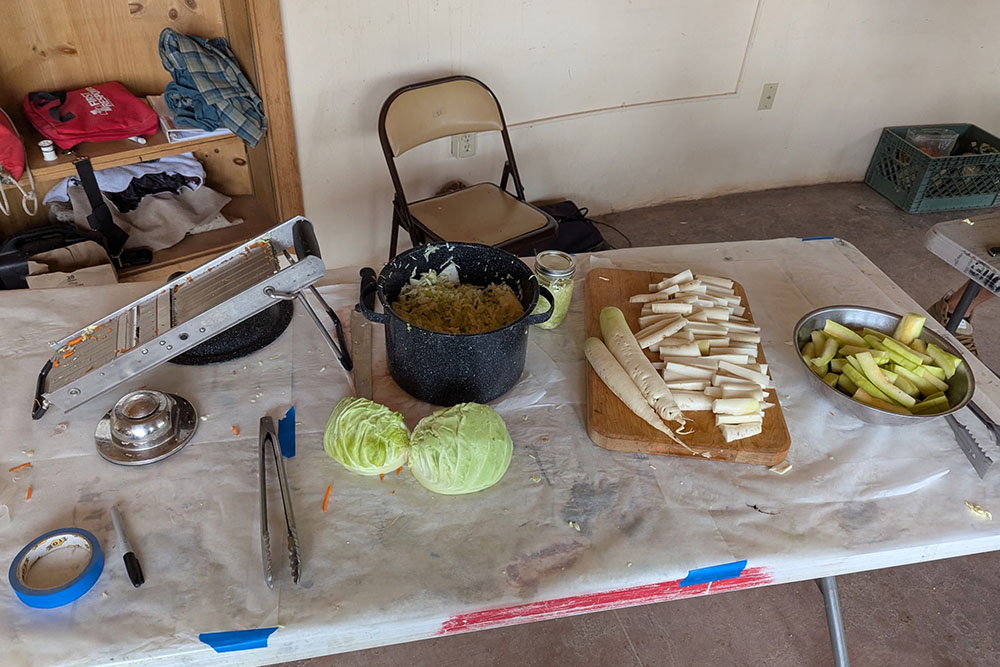
You can use whatever vegetables you prefer or have available. Kraut is traditionally made with cabbage, and Kimchi is traditionally made with a combination of cabbage, daikon radish, and carrots. But anything can be fermented! That’s right, ANYTHING. If you have an excess of a harvest, or a part of plant that you don’t typically use, try fermenting it!
“Chop it,
salt it,
and throw it in a jar.“
– Aaron, Food Church co-founder
Steps:
- Prepare your veggies: Thin slice or chop to desired shapes, making sure they will fit submerged in your chosen vessel. If making a large batch (such as a whole head of cabbage), a mandolin slicer is very efficient.
- Prepare the salt: Make up your 2% – 2.5% salt brine by dissolving salt in water. Cabbage can be rubbed with salt and left to sit for 20 minutes – 1 hour which will begin the breakdown process.
- Place the veggies into the vessel, and fill with salt brine (leaving space at the top for expanding gasses).
Additional Ingredient Suggestions:
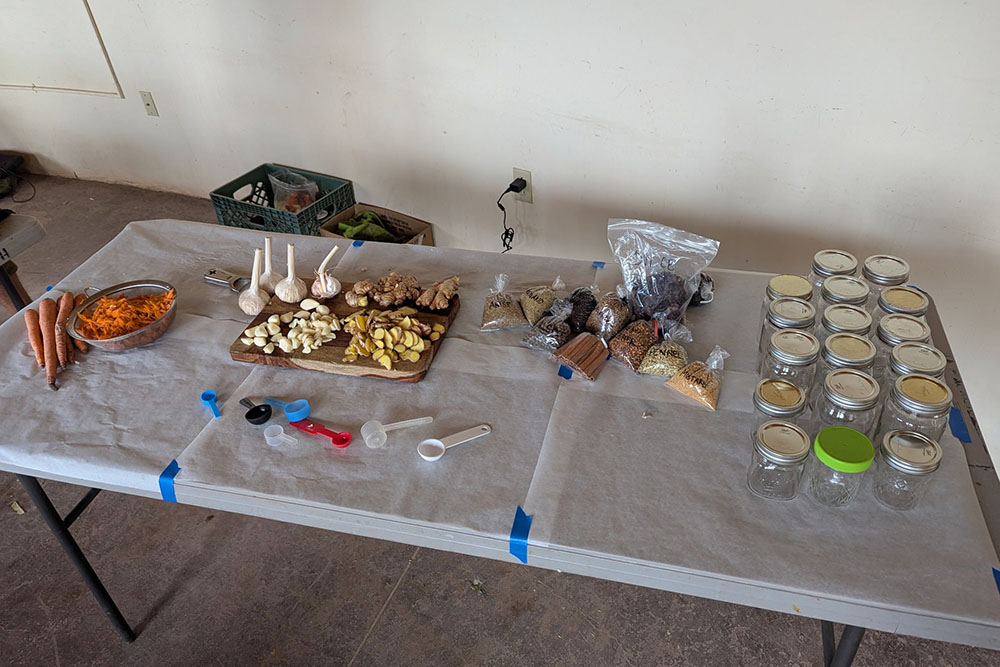
- Flavoring Plants: Garlic, ginger, onion, hot peppers, fresh herbs such as fennel or dill
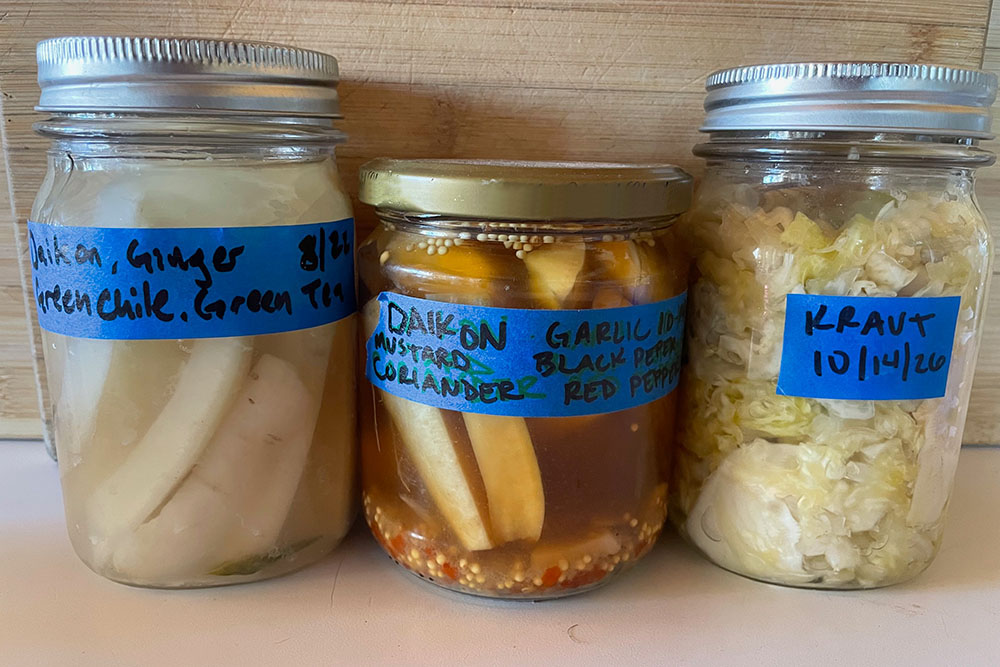
- Flavoring Seeds: Coriander, Peppercorns, Anise, Fennel, Dill, Cumin, Mustard
- Flavoring Spices: Oregano, Crushed Red Pepper, Cinnamon sticks, Dulce (seaweed)
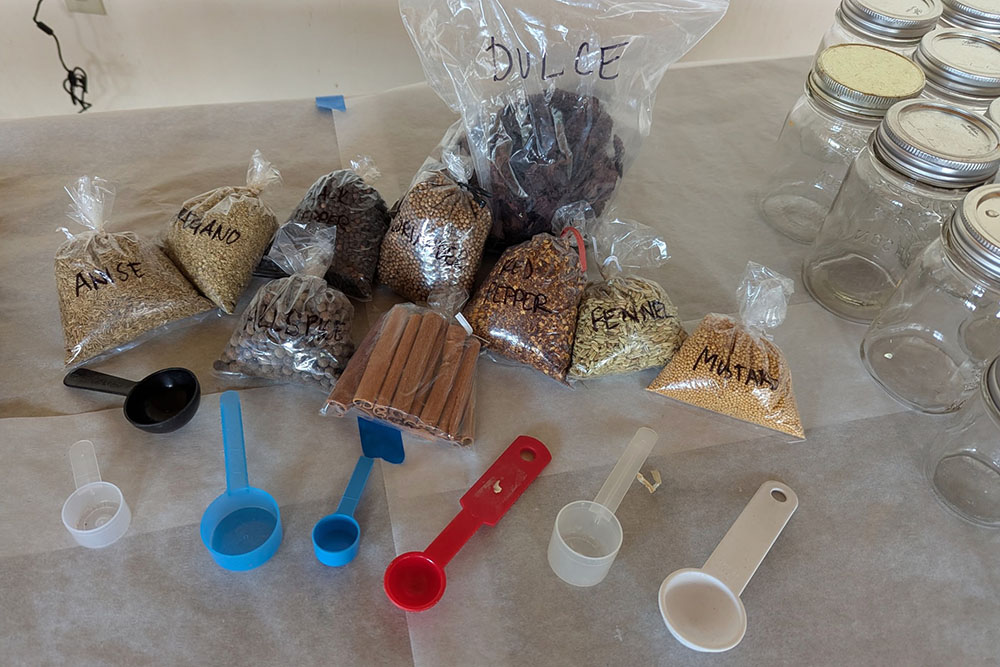
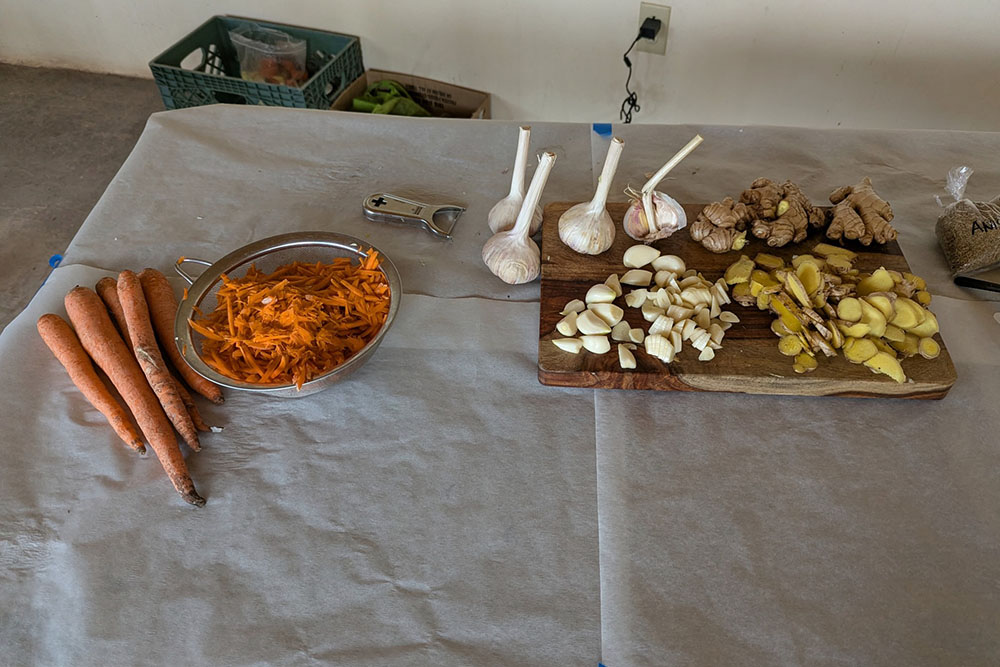
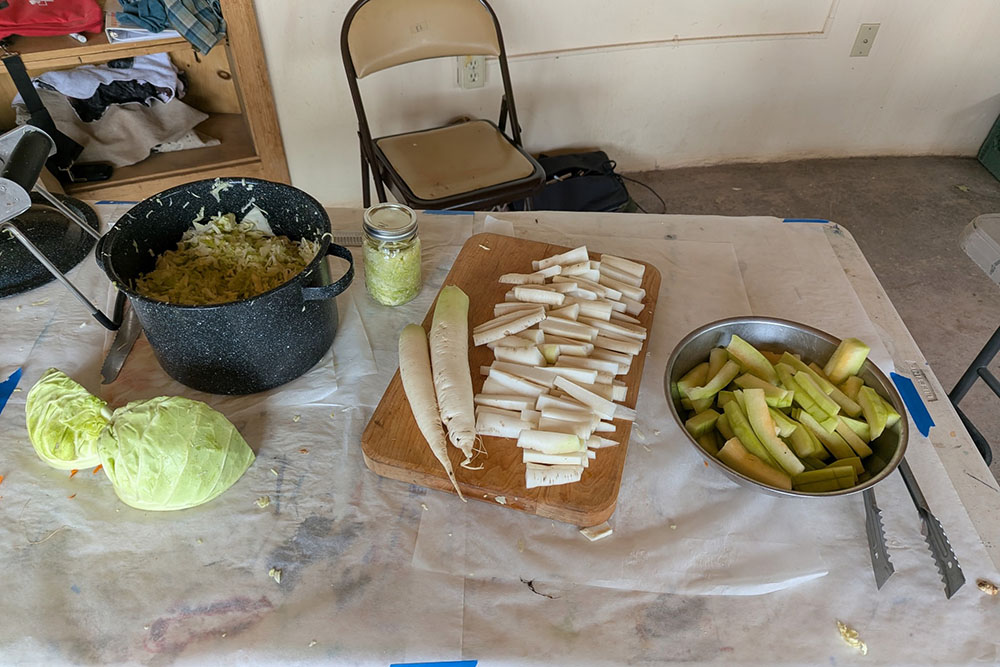
…And there you have it! Remember to label your jar with ingredients and date, as well as to periodically burp it.
DEMO: Vinegar
VINEGAR
Acetobacter converts any alcohol to acetic acid at roughly 1:1 (1% ABV ≈ 1% acidity). Legal vinegar = 4% min acetic acid. Kombucha = <4%, although typically <1% with ongoing conversion.
TIPS
Substrate: 5–8% ABV is ideal; below 4% yields weak vinegar, above 12% is toxic. Sulphites in commercial wine slow conversion — give extra time or use low-sulphite options.
Inoculation: Backslop from a previous batch at 10–20% of new volume. Or: fruit flies carry Acetobacter on their feet; allow extra time to start.
Vessel: Glass or food-grade plastic only. Fill no more than 60–70%. Shallow and wide converts 2–3× faster than tall and narrow. Oxygen is critical — Acetobacter is obligately aerobic; seal the jar and conversion stops.
Temperature: 77–86°F. Below 59°F crawls; above 95°F most strains die. The reaction is exothermic, so large batches self-heat past optimum. If starting from sugar or fruit: ferment alcohol at 64–75°F first, then warm to 77–86°F for acetification.
Aeration (air stone): A cheap aquarium pump with an air stone dissolves oxygen throughout the liquid, cutting conversion from months to 1–2 weeks (some report 3–6 days)
Do NOT stir: Physically stirring disrupts the biofilm and submerges the colony in anaerobic liquid where it can’t work. Leave undisturbed once the mother forms. (aeration via air stone is the exception — it dissolves oxygen without mechanical disruption)
Timeline: Week 1: faint film. Week 3: vinegar smell. Week 5: 3–4% acidity. Week 6–8: complete. Done = no alcohol harshness, no residual sweetness, clean sharp sourness. pH typically 2.4–3.4. An acetone smell means incomplete conversion.
Add flavors during aging, not active conversion: Solids (spices, fruit, herbs) interfere with the biofilm’s oxygen exchange. Let conversion finish first, then add flavoring ingredients during the aging phase. This is also when blending different vinegars makes sense.
Mold vs mother: Thin, tan, rubbery film = mother (fine). Fuzzy, black, or green = real mold; discard the batch and sterilize the vessel.
Mother storage: Store in finished vinegar, room temp, cloth cover. Don’t refrigerate if you want it active. Feed a splash of wine or cider every couple months. The newest, thinnest layer is the most active.
Continuous brewing: Decant(pour off) 75% of finished vinegar, refill with fresh alcohol. The mother keeps converting indefinitely.
Aging: Cool (59–68°F) gives a smoother, more integrated profile. Warm aging is sharper with more volatile esters.
Duration has a sweet spot: Extending fermentation to ~2 months significantly increases total phenolic and flavonoid content (peaks around week 3–8 for most substrates). But beyond that, oxidation starts degrading what you’ve built. Don’t over-age if polyphenols are the goal.
Cold storage as the “pause button“: Once you hit your desired flavor, move to the fridge. Cold doesn’t kill the culture but slows it to near-zero activity. This is how you “stop” a ferment at the exact moment you like it without pasteurizing, which destroys enzymes and decreases medicinality
Blending: The substrate’s flavor carries through. Blending different vinegars post-ferment is a common technique for complexity.
Clarifying: Let settle cold for 1–2 weeks, then siphon off the clear liquid. Or leave cloudy for a “raw” style.
Finished storage: Seal tightly in a narrow-neck glass bottle to stop further oxidation. Stable indefinitely at room temp; will continue to mellow slowly.
One-stage beats two-stage for polyphenol retention: Simultaneous alcohol + acetic fermentation retains ~30% more polyphenols than separating the two stages, because two-stage exposes the compounds to oxidative stress twice. If you’re doing a two-stage process, keep the acetic stage as short as possible.
Roasted/toasted ingredients: Maillard compounds survive fermentation, giving a smoky, complex profile that evolves over time.
Activated charcoal/ash: Adsorbs off-flavors and unwanted compounds; yields a smoother, more refined result.
Dried vs fresh herbs: Dried: best for roots, barks, seeds; better for long-term storage. Fresh: best for delicate aerial parts and flowers; more enzymatic activity but gets musty sooner, not good for aging
DEMO: Alcohol
ALCOHOL
Yeast converts sugar to ethanol and CO₂ at roughly 2:1 (~10% sugar solution → ~5% ABV). Any sugars or starches work, although starch requires enzymes from sprouted seeds (malt) or saliva to convert to sugar first. 1.5–2 lb starchy ingredient ≈ 1 lb sugar.
YEAST
Store-bought cultured yeast yields the most consistent results. Historical sources were either wild harvested, backslopped (add some of the previous batch), or saved on a stick, cloth, or in cracks in the vessel.
Wild yeast sources: fruit skins, fruit juice, bee pollen, veggie skins, flowers, honey, roots (ginger), seeds (mustard), pinecones, malted (sprouted) grains, certain herbs (mint, juniper, cloves, wormwood).
Rehydrate dry yeast in 105°F water with a pinch of sugar for 15 min before pitching. Cold water or dumping into high-sugar wort stresses cells and produces off-flavors.
MEAD (the simplest alcohol ferment)
Yeast strain matters as much as temperature: Same strain at 65°F vs 72°F gives different esters. Different strains at the same temp give different profiles
Yeast reuse: After a clean ferment, siphon the liquid off, swirl the sediment, decant the liquid, and store the yeast slurry in the fridge for 2–3 weeks (or freeze for months). Pitch it into the next batch. Saves money and builds a “house yeast” over time. Alternatively, add a small amount an active batch into the new batch.
MEAD
Mead may be the simplest alcohol ferment to make, just add water to raw honey. There’s already a ton of yeast in honey, but at 16-18% water, the osmotic pressure is too high for microbes to divide. The moment you add enough water to drop that pressure, the yeast wakes up. For a mead, you’re typically diluting to 20–30% honey by weight, however, mixtures above 20% honey may require nutrient addition because honey is nitrogen-poor, and yeasts require nitrogen, so add bee pollen, fruits, or nitrogen rich herbs.
- 20–25% honey by weight: dry, wine-like
- 30–40%: sack mead (medium-sweet)
- 40%+: metheglin (dessert, ~15%+ ABV)
- Mixtures above 20% honey may require nutrient addition (honey is nitrogen-poor). Add bee pollen, fruits, or nitrogen-rich herbs.
ABV & RESIDUAL SUGAR
Roughly 50% of consumed sugar ends up as alcohol, however, leftover sugar tastes nice:
- Dry wine: <0.5% residual sugar by weight
- Dry beer: <2% residual sugar by weight Dessert wine/beer: 5–15% residual sugar by weight
MEASURING PROGRESS
A hydrometer or refractometer is the only way to know what’s actually happening. Everything else is guessing.
Hydrometer: Measures specific gravity. Needs ~2 oz sample in a test jar. Most accurate for FG. Read at the top of the meniscus, at calibration temp (usually 68°F).
Refractometer: Measures Brix by light refraction. Needs only a drop. Accurate for OG, but alcohol skews FG readings low — use a correction chart (Malthus or Balling) or convert corrected Brix to SG.
- OG: reading before pitching. Starting sugar.
- FG: reading after fermentation appears done. Ending sugar.
- ABV: (OG − FG) × 131. (1.050 → 1.010 = 5.2%.)
- Done: gravity stable 3 days, liquid clearing, airlock quiet.
- Stuck: no gravity change in 5+ days, still hazy, no aroma. Check temp, nutrients, or repitch.
TIMELINES
Beer is a sprint, wine is a marathon, mead is a cross-country run. Same biochemistry — just different paces.
Primary Rack Secondary Bottle
Beer: 1–2 wks 1–2 wks 2–4 wks 4–6 wks
Wine: 1–3 wks 3–12 mos 6 mos–yrs 1–2 yrs
Mead : 2–3 wks 3–6+ mos 6 mos–yrs 6 mos–2 yrs
Beer (any starch-based ferment): Primary fermentation is the active phase — a thick, foamy head piles up at the top and the airlock bubbles constantly.
Rack (siphon the liquid off the sediment, optional) at 1-2 weeks,
Bottling: add priming sugar (Roughly 2–3.5 tsp per gallon)
Rest (yeast finishes up, flavors settle): 2–4 weeks.
Drinkable: 4–6 weeks; good at 8–12.
Wine: Reds ferment on their skins for 1–2 weeks — that’s where color and tannin (the astringent, drying quality in red wine) get extracted.
Rack before week 3 or tannins turn bitter. Whites rack much earlier, at 3–5 days, to preserve freshness. Secondary fermentation(after racking) is where wine actually becomes wine.
Bottling: Add sulfite (easiest method: crush 1 Campden tablet per gallon of wine, wait 30 min, then bottle).
Drinkable at 1–2 years minimum.
Mead: Slower than beer (honey is nutrient-poor and made of multiple types of sugars). Expect a false stall early on (~10% of the sugar consumed) while yeasts change gears to a new sugar type. Not a failure; wait 3–5 days before intervening.
Rack: off the sediment before the months-long aging phase or it gets a cardboard/wet dog flavor.
Drinkable: 6 months minimum (slowest of the three), 1–2 years for complexity.
RACKING
What: Siphoning the liquid off the sediment (yeast, trub, pomace, lees) into a clean vessel.
Why: Leaving the ferment on its own debris causes autolysis — yeast cells release off-flavors (cardboard, yeasty, “wet dog” flavor/aroma). In wine, leaving it on skins too long extracts harsh tannins.
When:
- Beer: after gravity stabilizes for 3+ days (usually end of primary). Wine (white): 3–5 days.
- Wine (red): 1–2 weeks.
- Mead: after primary (2–6 weeks), before the long secondary.
How: Pour slowly or use a clean siphon (racking cane), clean receiving vessel, fill to the brim (minimize headspace/O₂), seal with airlock.
How many times:
- Beer: 0–1.
- Wine: 1–3 (more for long aging).
- Mead: 1–2.
- Rule of thumb: Every time you rack, you’re trading a small amount of O₂ exposure for a big reduction in off-flavor risk. Worth it for anything aging >2 weeks.
TIPS & TECHNIQUES
Temperature: cooler = cleaner, slower; warmer = more esters, faster.
Two-step temp shift: start warm (1–3 days) to get active fermentation going, finish cool for complexity. Daily fluctuations → more diverse microbe profile → more complex flavor.
*Measure the ferment, not the room — Active fermentation generates heat. The liquid can be 5–10°F warmer than the air around it
Aeration: yeast needs oxygen for the first 24–48 hours (sterol cell membrane synthesis). Stir or shake the carboy vigorously, or use a sterile air stone for the first day or two. After that, seal it — oxygen during active fermentation causes oxidation and off-flavors.
Headspace: leave 20–30% during active fermentation to prevent foaming over. Fill nearly to the top for long-term storage (minimizes oxidation).
Bottle conditioning: add a pinch of sugar and yeast before bottling, triggering a secondary fermentation that naturally carbonates the brew and enhances flavor complexity and shelf life.
Spunding: An alternative to bottle conditioning for carbonation. Seal the fermenter before fermentation finishes (when gravity is ~1.010–1.015), let the remaining yeast carbonate it in the sealed vessel, then cold crash and bottle/keg. More natural, less fiddly, but you need a pressure-rated vessel (keg, or a carboy with a blow-off until it drops). No priming sugar needed
Cold storage as the “pause button”: once you hit your desired flavor, move to the fridge. Cold doesn’t kill the yeast but slows it to near-zero activity. This is how you “stop” a ferment at the exact moment you like it without pasteurizing, which destroys enzymes and decreases medicinality.
Different sugars → different flavors: dextrose = clean, neutral. Honey = floral, round. Molasses = dark, funky. Maple = caramel, warm. The sugar choice shapes the ester and fusel profile as much as the yeast strain.
Roasted/toasted ingredients: Maillard compounds survive fermentation, giving a smoky, complex profile that evolves over time.
Activated charcoal/ash: adsorbs off-flavors and unwanted compounds; yields a smoother, more refined result.
Keep a plain control batch: When experimenting, always run one batch with no additions alongside your test batch. Otherwise you can’t tell if the new ingredient helped, hurt, or did nothing. This is basic experimental design and most home fermenters skip it
A food-grade scale: the single best $15 tool you can buy — Volume measurements (tsp, cups) are too imprecise for anything where you’re working in small amounts. One scale, every ferment, every time
Taste on a schedule: Day 1, 3, 5, 7, 14, 30. Not “check it when I remember.” A schedule forces you to build a mental model of your ferment’s rhythm (when it peaks, when it starts to turn, when it’s done). You’ll catch problems early and learn exactly when your ferment hits its sweet spot
Keep a log: record your successes, prevents making the same mistake twice
BEER-SPECIFIC
Mash: Steep crushed malt(sprouted grain, typically roasted) in water at 149–156°F for 60 min. This is where starch → sugar happens — the malt’s own enzymes (activated during sprouting) do the work. A whole separate phase before fermentation. If adding unmalted adjuncts (rice, corn, potato, wheat), keep them below ~50% of the total grain bill, or the enzymes can’t keep up and you get a stuck mash. Potato and taro need to be cooked first so the enzymes can reach the starch.
Lager note: The timeline above is for ales. Lagers ferment cold (45–57°F) with bottom-fermenting yeast, take 1–2 months minimum, and require a “lagering” phase (weeks to months at near-refrigeration) for cleanliness. Don’t try to lager at room temp.
Priming sugar: ~1/4 tsp sugar per 12oz bottle, ~1/2 tsp per 750 ml (≈ 2–4 g/L). Too much = bottle bomb. Too little = flat.
WINE-SPECIFIC
Crush/destem: Reds ferment on skins (color + tannin). Whites are pressed immediately and ferment on juice only.
SO₂: 30–50 mg/L at crush (white), 50–75 mg/L (red). Repeat 25–50 mg/L at each racking and at bottling. Wine is more oxidation-sensitive than beer or mead (no CO₂ blanket once fermentation stops). Wait 30 min before pitching. Easiest method: crush 1 Campden tablet per gallon, wait 30 min.
No metabisulfite? Sulfur matches (light one, drop in empty vessel, seal) at crush AND bottling. Or: sodium metabisulfite from the canning aisle (~0.44 g/gal = 1 Campden tablet). Ascorbic acid (vitamin C) helps with oxidation but does NOT kill wild yeast — use it alongside, not instead.
No sulfite at all: fill to the brim, work cold and fast, cold-stabilize (39°F for 1–2 weeks) before bottling, use burst disc caps. Gets you a drinkable wine for 1–3 years with slightly higher oxidation risk.
MLF (Malolactic Fermentation, optional): Oenococcus oeni converts sharp malic acid (green apple) to softer lactic acid (cream, butter). Adds 2–4 weeks. Common in Chardonnay, Pinot Noir, most reds. Not in crisp whites or sparkling.
TROUBLESHOOTING
Vinegar / sharp acid smell: Acetobacter got in. Airlock failed, headspace too big, or the ferment finished and the alcohol is now oxidizing. Enjoy as vinegar, use for cleaning, or discard.
Sulfur / rotten egg: hydrogen sulfide or methanethiol. Usually a nitrogen deficiency (yeast nutrient!) or a stressed yeast. Aerate, add nutrient, and it often resolves. If it persists past 2 weeks, it’s stuck in the matrix and won’t go away.
Acetone / nail polish remover (not sulfur): fusel alcohols. Fermenting too warm. Cool it down.
Funky / barnyard / wet dog: diacetyl or geosmin. Diacetyl = yeast stress (too warm, too little O₂ at start). Geosmin = Brettanomyces or Lactobacillus contamination.
Fizzy / gushing bottle: under-carbonated at bottling, or fermentation wasn’t actually done. Don’t drink it. Let it sit 2 more weeks.
Flat / no carbonation: over-primed (too much sugar → all consumed, yeast died) or under-primed (too little sugar). Check your math.
**Smell is your best instrument: Before you reach for a hydrometer, pH strip, or refractometer, lift the lid and smell. You’ll catch a problem (vinegar, sulfur, mold, autolysis) days before a number would tell you. Train your nose: learn what “good” smells like for each ferment type, and you’ll recognize “not good” instantly.
MEDICINALITY
“Dry hopping”: aromatic compounds (terpenes, esters, volatile aldehydes) are heat-sensitive. Boiling destroys or drives off most of them. Add herbs post-fermentation.
Dried vs fresh herbs:
- Dried = more stable, less “nutritious.” Best for roots, barks, seeds, mucilaginous herbs (Astragalus, Reishi) — require water-soluble extraction or high alcohol penetration that dried forms facilitate. Best for long-term storage.
- Fresh = less stable, more nutrients and enzymes → more rapid transformation. Best for delicate aerial parts (flowers, basil, mint, cilantro) and herbs that lose potency on drying (Skullcap, St. John’s Wort). Blanch 5–15 seconds. Becomes musty sooner, not as good for aging. Historically added within 24 hours of consuming. Start with half the amount the recipe suggests. Add more if needed (you can’t take it out). Taste daily.
Activated charcoal/ash: Food-grade activated charcoal adsorbs toxins, pesticides, and unwanted color compounds. Reduces funky odors in long ferments, yielding a smoother, more refined flavor
Dehydrate leftover sediment(lees) or spent grain and grind to flour. The brewing process removes starch and sugars, leaving higher concentrations of protein, vitamins, minerals, and fiber. Total amounts go down (you lose some to the beer), but bioavailability increases.
Fruit peels/skins (pineapple rinds, apple cores, citrus peel, melon skins) harbor wild yeasts and bacteria. Submerged in sugar water they create a vigorous wild yeast water (like tepache) that can inoculate veggie ferments or serve as the base for fizzy probiotic sodas.
Any stalled ferment (stuck at high gravity) can be restarted with a fresh yeast pitch or used as a substrate for vinegar(AAB).
Bitter herbs: Hops are added for preservative qualities and balancing sweetness/imbuing complexity. Herbs add pronounced bitterness when boiled early in the mash, flavor when added mid-boil, and aroma when added at the end of the boil or post-ferment. If you’re not using a bittering herb, you’re making mead or cider, not beer. Some personal favorite bitter herbs include yarrow, wormwood, mugwort, juniper berries, nettle, pine resin, sage, tea, and more.
Cold crashing: Chill to 33–36°F for 3–5 days before bottling. Drops yeast and proteins out of suspension — the single most effective clarification step. Do it before adding priming sugar or the yeast won’t carbonate.
Bottle orientation for storage: Corked bottles: store horizontal (keeps the cork swollen and sealed). Swing-top or crown cap: vertical is fine.
STORAGE
–Beer: 12–18 months for most styles. IPAs and hoppy beers: drink within 6 months (hops fade).
–Wine: 1–20+ years depending on structure (tannin, acid, sugar). Light wines: 1–3 years. Big reds: 10–30.
–Mead: 1–2 years minimum. Honey’s natural sugars and high ABV make it very shelf-stable. Some traditional metheglins are aged 10+ years.
–All three: cool, dark, stable temperature. Heat and light are the enemies. A 72°F (22°C) garage will kill a beer in 6 months and a wine in 2.
DEMO: LAB (kraut / kimchi)
KRAUT / KIMCHI
LAB is found on all plants. It thrives in 2–5% saline and produces lactic acid, which inhibits the growth of competing bacteria.
BRINE
~1 tsp salt : 1 cup water = ~2.5% brine. More watery ingredients (cucumber, zucchini) go to 2 tsp.
Some vegetables (like cabbage) have enough water that you can skip added brine entirely — rub with salt, wait, and the juices extract via osmosis. In this case: ~1–2 tsp salt per lb of veg.
These ferments are typically wild-cultured; all vegetables carry enough surface bacteria to start. Backslop (adding brine from a previous batch) is optional but does two things: accelerates acidification, and skips the early Leuconostoc and Weissella phases (the bacteria active in the first few days before the environment gets too acidic). The result ferments faster but tends toward a flatter, more uniformly sour flavor.
Historically used in high-heat or low-salt situations, a higher salt concentration was used to selectively favor the desired bacteria over spoilage organisms.
TIMELINE
Day 1–3: first bubbles, salty-cabbage taste
Day 3–7: first tang, flavors start to merge
Day 7–14: light tang, still crunchy — “young kimchi”
Day 14–28: rounded tang, texture softens — “classic kraut” (most recipes call for this)
Week 4+: deepening funk, wine-like sour, texture softens further — “over-ripe”
Months 6+: diminishing returns, very soft — “aged kimchi,” prized for cooking
TIPS
Surface area / chop size: Finer shreds = faster ferment (more cell wall rupture, more sugars exposed). Whole pieces = slower, more even.
Fermenting whole vs shredded changes the type of sour: Whole vegetables ferment from the outside in, creating a flavor gradient (sour skin, milder center). Shredded ferments uniformly. Same pH, different flavor architecture. A whole fermented carrot tastes fundamentally different from a shredded one.
Hard veggies ferment more slowly: You can add different vegetables at different times — Add hard vegetables (carrots, daikon, radish) first, softer ones (cucumber, zucchini) a few days later. This way everything hits its ideal texture at the same time instead of the soft stuff going to mush while the hard stuff is still crunchy.
Submersion: Keep ingredients 1–2 inches below brine at all times. The air-water interface is where Kahm and mold form. Use a weight (ceramic, glass, brine-filled zip bag, pie plate). The #1 cause of “failed” ferments.
Temperature: Warmer=faster and funkier; cooler = slower and cleaner flavor. Ideal 60–75°F. Below 55°F slows dramatically, increasing mold risk. Above 86°F shifts the community toward Lactobacillus dominance (sharper, less complex). Keep swings under 10°F — even 5–10°F can flip which species dominate.
2 step temp shift: start warm(1-3 days) finish cool to increase storage time while allowing LAB to rapidly acidify initially.
Daily temperature fluctuations: lead to more diverse microbe profile(and therefore flavor profile).
Cold storage as the “pause button”: Once you hit your desired flavor, move to the fridge. Cold doesn’t kill the culture but slows it to near-zero. This is how you “stop” a ferment without pasteurizing.
Kahm vs mold: Thin, creamy-white, slightly bubbly, smells like yeast = Kahm (harmless, skim off, keep going). Fuzzy, black, green, or pink = mold (discard batch).
Sulfer/Rotten Egg: The early “rotten egg” smell is normal — H₂S from the first 2–3 days of fermentation (early Leuconostoc and Weissella produce it). It’s not a failure; it burns off as the pH drops. If it’s still there at day 7, something’s off
Crispness (tannins): Oak leaves, grape leaves, bay leaves, any fruit leaf, juniper berries, black tea, spices. Inhibits pectinase (the enzyme that causes softening), ensuring crunch even after long ferments.
Crispness (calcium, less effective): Eggshells (boiled, crushed), hard water, sea ingredients (kelp, dulce), calcium chloride.
Slimier brine (for sauces/condiments): Add more pectin-rich ingredients.
Umami boosters: Sources of glutamates — mushrooms, kelp, whey, nooch, sundried ingredients.
Different sugars → different flavors: A pinch of different sugar types feeds different bacteria and shifts flavor and mineral profiles.
Roasted/toasted ingredients: Maillard compounds survive fermentation, giving a smoky, complex profile that evolves over time.
Activated charcoal/ash: Adsorbs off-flavors; reduces “funky” odors in long ferments, yielding a smoother result.
Rapid fermentation (zero waste): Rice water (starch water) as a base.
Spent grain & lees: Spent beer grains (residual enzymes and yeast) add bready flavor and accelerate acidification. Wine lees impart a subtle fruity tang and deep red hues (red wine sediment).
Alcohol-assisted fermentation: Small amounts of sake, beer, or wine in the brine selectively inhibit spoilage bacteria while allowing LAB to thrive, and act as a solvent for spice compounds that water alone can’t extract. Traditional in Japanese kasuzuke (sake lees pickles).
Oil topping (oxygen restriction): For condiments like chili pastes, pestos, or fermented garlic — a thin layer of oil on top after active bubbling ceases creates an anaerobic seal that prevents Kahm yeast and mold more effectively than a water lock. Must only be done after the active phase to avoid trapping gas.
Dehydrate for zero waste: Kimchi sprinkles on popcorn, kraut powder for soups and sauces.
One variable at a time: Change one thing per batch.
Keep notes: A sticky note on the jar (“batch 7 — 3% salt, bay leaf”) is how you build intuition.
Taste on a schedule: Day 1, 3, 5, 7, 14, 30. Forces you to learn your ferment’s rhythm.
Taste the brine, not the veg: The brine is a cleaner signal than the vegetable. The veg’s flavor is a blend of its original taste + the acid, which muddies your read. The brine is pure fermentation output. If the brine tastes right, the veg will too.
Smell is your best instrument: You’ll catch a problem (vinegar, mold, off-flavor) days before a number would tell you.
Dried vs fresh herbs:
- Dried: roots, barks, seeds; better for storage.
- Fresh: delicate aerial parts, flowers; more enzymatic activity, musty sooner, not good for aging.
- Garlic, ginger, chili — All three are antimicrobial (allicin, enzymes, capsaicin) and feed LAB. They’re not just flavor — they actively help the ferment. A common beginner mistake is leaving them out because the recipe says “optional.
Freezing as a hard stop: Fridge slows to near-zero; freezing stops entirely. Thaw and it resumes. Useful if you want to pause for weeks or months without any risk of over-fermenting.
The “first jar” problem: Your first 3–5 ferments will be mediocre because you’re calibrating your palate and your process simultaneously. Don’t judge your technique on early batches. The learning curve is real; most people don’t have a reliable baseline until batch 7–10.
A crock isn’t just aesthetic: Traditional kraut was always in crocks, not jars, for a reason. A crock has more surface area relative to volume, which means more gas exchange at the brine surface. LAB isn’t strictly anaerobic — it’s anaerobic below the brine. That surface exchange actually helps the early Leuconostoc phase. A narrow mason jar slightly slows the first few days. Not a dealbreaker, but it explains why traditional recipes call for crocks.
References
Buhner, Stephen Harrod. Sacred and Herbal Healing Beers: The Secrets of Ancient Fermentation. Brewers Publications, 1998.
Dissanayake, Indeewarie Hemamali, et al. “Lactic Acid Bacterial Fermentation as a Biotransformation Strategy to Enhance the Bioavailability of Phenolic Antioxidants in Fruits and Vegetables: A Comprehensive Review.” Food Research International, vol. 209, 2025, art. 116283.
Dissanayake, Indeewarie Hemamali, et al. “Lactic Acid Bacterial Fermentation as a Biotransformation Strategy to Enhance the Bioavailability of Phenolic Antioxidants in Fruits and Vegetables: A Comprehensive Review.” Food Research International, vol. 209, 2025, art. 116283.
Hui, Y. H., et al., editors. Handbook of Food and Beverage Fermentation Technology. Marcel Dekker, 2004.
Hui, Y. H., and E. Özgül Evranuz, editors. Handbook of Plant-Based Fermented Food and Beverage Technology. 2nd ed., CRC Press, 2012.
Katz, Sandor Ellix. The Art of Fermentation: An In-Depth Exploration of Essential Concepts and Processes from Around the World. Chelsea Green Publishing, 2012.
Katz, Sandor Ellix. Wild Fermentation: The Flavor, Nutrition, and Craft of Live-Culture Foods. 2nd ed., Chelsea Green Publishing, 2016.
Lee, Jisu, et al. “Efficient Biosorption of Nanoplastics by Food-Derived Lactic Acid Bacterium.” Bioresource Technology, vol. 447, 2026, art. 134234.
Lee, Woojin, et al. “Single-Cell RNA Sequencing Reveals That Kimchi Dietary Intervention Modulates Human Antigen-Presenting and CD4⁺ T Cells.” npj Science of Food, vol. 9, no. 1, 2025, art. 236.
Schropp, N., et al. “Fermented Foods and Inflammation: A Crossover Intervention Trial with Fresh and Pasteurized Sauerkraut.” European Journal of Clinical Nutrition, 2026.
Stäubert, C., et al. “Metabolites of Lactic Acid Bacteria Present in Fermented Foods Are Highly Potent Agonists of Human Hydroxycarboxylic Acid Receptor 3.” PLOS Genetics, vol. 15, no. 5, 2019, e1008145.
Wastyk, H. C., et al. “Gut-Microbiota-Targeted Diets Modulate Human Immune Status.” Cell, vol. 185, no. 15, 2021, pp. 2738–53.
Wei, L., and M. L. Marco. “The Fermented Cabbage Metabolome and Its Protection Against Cytokine-Induced Intestinal Barrier Disruption of Caco-2 Monolayers.” Applied and Environmental Microbiology, vol. 91, no. 5, 2025, e02234-24.
“Fermentation Library.” Rex Research Library Annex, n.d., https://rexresearch1.com/Fermentation/FermentationLibrary.html
(this is a personal archive site hosting scanned PDFs of books, including those cited above.)